Search This Blog

Custom Search
Showing posts with label diy. Show all posts

Mar 18, 2012

Do You Need To Replace Electrolyte in Your Car Battery?

Q: Just recently I had to replace my car battery. Some weeks before, my battery bracket loosened and the battery shifted, knocking off one of the caps, which I didn't know until I needed a jump. I put regular tap water inside and replaced the cap. Tap water was all I had at the time. After that the battery continued to weaken until it needed to be replaced. Could I had put any of the following substances in the battery to extend its life? Gatorade (powder or liquid), salt, saltwater, baking soda, sea water, or distilled water.

A: Anything on your list would have damaged your battery instantly. Battery electrolyte is sulfuric acid and water, and a certain amount of the lead electrolyte in solution. How much Lead? Depends on the state of charge of the battery, so the possibility of mixing up a concoction to replicate the spilled electrolyte accurately is not easy.

The best replacement for spilled electrolyte is the other cells in the same battery. Get a battery tester or a clean large syringe, and equalize the level of electrolyte between the 6 cells. If this leaves all of them too low, which it will, you can now add an identical amount of fresh electrolyte purchased from the auto parts store to bring them up to the correct level.

Low electrolyte levels caused by normal electrolysis in the battery should be topped off with nothing else except distilled or demineralized water.

Mar 17, 2012

My Reverse Lights Come on When I Hit the Brakes

Q: Every couple of months when I hit the breaks in my 1995 Toyota Camry, the reverse lights come on. They will do this for about a week and a half and then go back to only coming on when in reverse. What is causing this and how do I fix it?

A: There’s a bad ground somewhere near the tail lights, causing the brake lights to source their ground through the backup lights. Check ground point Ba1, which is in the trunk.

Mar 16, 2012

Can I Save Money and Repaint My Car's Clearcoat Only?

Q: My 2004 Mitsubishi Endeavor has started losing it's clearcoat in patches. Is there any way I can repair it without getting a new paint job?

A: No. All the clear coat is going to have to be sanded off, because it’s not bonding properly to the paint underneath it. In theory, you could then respray just the clear coat. In reality, the pigment layer will be sanded through to the primer in a lot of places. So, the color coat will have to be resprayed as well.

Mar 15, 2012

Which Tires Hydroplane More Easily?

Q: Do low profile tires tend to hydroplane more than regular tires?

A: Hydroplaning is a function of tire footprint, all other things being equal, a tire with a wider footprint will tend to hydroplane more. If the low-profile tire is wider, it will indeed hydroplane more easily. If the tire is low-profile, but has the same tread width, no.

Mar 14, 2012

Synthetic vs. Conventional Motor Oil

Q: How do you tell the difference between synthetic oil and conventional motor oil? A not so honest service station in my area was found adding regular motor oil, yet charged people for the more expensive synthetic oil. Please let me know if there is a simple way of telling the difference. I am quite sure the reading public would like to know this also.

A: The short answer is there’s no way to tell without sending a sample out for a chemical analysis.
My only suggestion is to watch the technician as he adds product.

Mar 13, 2012

How To Refill Nitrogen-Filled Tires

Q: I just purchased a car with nitrogen-filled tires. I know they aren't supposed to leak like air-filled tires can but leaks DO happen. So what do you do if a slight pressure drop happens? How much air can be put in without losing the nitrogen benefit? I would hate to have to go to a tire dealer and wait for a tech to put some in. Do you know of a company that markets aerosol cans of nitrogen similiar to "Fix A Flat"?

A: Most places that fill tires with N2 will top them off for free. I like the aerosol can idea, though. No one is doing that that I’m aware of.


Mar 12, 2012

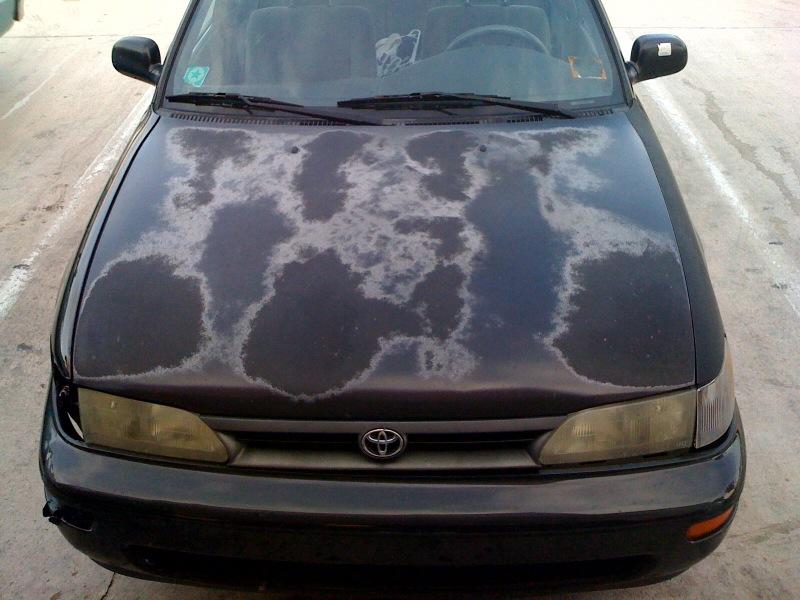
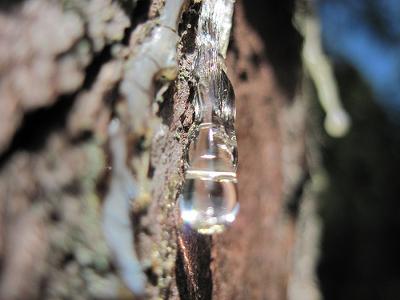
How To Remove Tree Sap From Car Hood

Q: I'm forced to park my car under a tree. In the early spring tree sap drops on my roof and hood. Commercial products claiming to remove these stains don't even come close to working. Cleaner waxes are simply a waste of time and effort. Any ideas?

A: Aside from moving the car? Try a car cover? If Bug & Tar remover doesn’t cut it, you’re not going to find anything more aggressive that won’t damage the paint.

Mar 11, 2012

Why Does Water Collect Inside My Car's Headlights?

Q: My headlights are always collecting water inside. The dealer says he can replace them, but they’re very expensive, and he wouldn’t guarantee that the new headlights wouldn’t collect water also. I took out the headlamp assemblies and coated all of the seams between the clear lens and the back with bathtub caulk, and gooped up the rubber dingus that goes over the headlight wires with a lot more caulk, but it didn’t help a bit.

A: Let’s examine why there is water inside the lamp assemblies in the first place. As the outside temperature goes down and your nice warm headlamps cool off (either from being in the sun or just from being turned on), cooler, moister outside air trickles into the housings. The housings are vented top and bottom to allow for pressure differences, or they would quickly crack and fail. When the clear plastic lens is even a little bit cooler than the air inside the housing, droplets of moisture will condense on the inside of the lens. That’s normal. When the outside temperatures come back up in the morning, the moisture will evaporate.

Some vehicles don’t vent as well as others. Some drivers keep their cars parked in shady, damp areas or in cool, damp underground parking structures. And the moisture collects not as tiny droplets of mist but as what looks more like raindrops, and can even run down the glass and pool inside the housing.

Check to see if there’s a Technical Service Bulletin for your make and model of vehicle. If so, there may be a retrofit housing or an upgrade to the venting system. If not, you’re on your own. The first thing to try, if all you have is droplets, is to leave your headlights on while driving for a couple of hours, forcing the moisture off. If you have a spoonful or more splashing around, you may need to remove the housing and dry it out. Pour off the excess water, then add a few ounces of rubbing alcohol to the housing, sloshing it around and pouring it out. Repeat. Let the housing dry for a couple of hours in the sun or inside a nice warm house, preferably in some air that’s moving. Check that any vents aren’t plugged with spider eggs or mud. Install the housing and try to park facing south.

Mar 10, 2012

My Car's Battery Goes Dead

Q: Our 1999 Ford Taurus, which resides under a cover, almost always has a dead battery after it sits for a month. I have had to replace it three times in the past seven years. I tried one of those solar panels plugged into the cigarette lighter by having a clear plastic window installed in the cover. The plastic housing on the charger actually melted when the heat outside got to 118 F and shorted, further draining the battery. Who knows what the temperature got to inside the car? Sure, I can disconnect and reconnect the battery, but for what that takes I can jump-start it with a portable jump-start battery device easier. Any advice to keep the battery from dying? The car’s parked in a lot across the street from the house, so running an extension cord to a trickle charger isn’t an option.

A: Melted the solar charger? Man, I bet you could bake cookies in there on a sunny day.

Letting any battery discharge that deeply will damage it immediately, which explains your high failure rate. And the heat will make the battery self-discharge even faster than normal.

My best suggestion: Get a battery disconnect switch, wired into the ground cable. This won’t prevent normal self-discharging, but it will eliminate any parasitic drains (like the radio presets and computer memory) that are killing the battery between uses. Then whenever you need the car, all you have to do is open the hood, turn the switch on, and start it up and drive away with clean hands. A decent battery should have enough juice left after a month to light the fires. In case the idle period is a little longer, keep an auxiliary starter box in the house on a charger. You can probably get enough charge into the nearly dead battery by plugging one of these gadgets into the cigarette lighter, also leaving you with clean hands.

A second suggestion would be to hard-mount the solar charger on the front license-plate bracket and leave it uncovered by your car cover. Park the car pointing southwest toward the afternoon sun to catch the most rays.


Would The Prius Get Better Gas Mileage If It Weighed Less? Part 2

Q: I read your answer concerning "Would The Prius Get Better Gas Mileage If It Weighed Less?". It was very interesting and I agree with your discussion but I'd like you to go a step further. The thing that is confusing about hybrids has to do with their efficiency. It seems to me that using an internal combustion engine to charge the batteries which power the electric motors that move the car would be less efficient that moving the same car with the internal combustion engine. I recall someone's theory having to do with "Conservation of Energy". Applying the same technologies that maximizes the efficiency of the gas engine as a "charger" could also make it a better "mover". Right?

A: You are correct, charging the batteries onboard with an IC engine and then powering the wheels with an electric motor is inherently less efficient than just gearing the IC engine to the wheels. That’s why most hybrids have some way of doing either or both.

Two compelling reasons to use batteries:

In a conventional hybrid, the batteries are on board to capture energy during regenerative braking, using this energy (normally wasted as heat in the brakes) to accelerate the car later.

In a plug-in hybrid, the batteries are recharged by the grid. A PHEV, if driven for short enough distances to not drain the batteries, may never consume gasoline.


Mar 9, 2012

Would The Prius Get Better Gas Mileage If It Weighed Less? Part1

Q: I have an idea for a story in your magazine. I was thinking you guys could buy a Prius and pull the batteries and anything at all related to the hybrid portion of the car. Obviously this adds up to a lot of weight—dead weight on the interstate where many people do most of their driving. No doubt this car would then get much better highway mileage. If they built it that way, it would be much cheaper and have a much smaller “carbon footprint” due to much less energy being used to build it. As the car is now, it often has to recharge the battery pack on the highway, hurting its real mileage, not to mention the burden of all that dead weight.

A: Your logic is faulty. Here’s why:

1. Overall weight has virtually no effect on steady-state cruising economy. Fuel consumption at expressway speeds on level ground is determined largely by aerodynamic drag and other parasitic drags such as the tire’s rolling resistance.

2. The onboard battery pack is charged, for the most part, when the vehicle slows down, capturing the energy that otherwise would be dissipated as heat in the brakes. It normally doesn’t get charged during steady-state driving or acceleration. (One exception: On some hybrids, notably Toyotas, the battery will be charged to load the engine when the engine is otherwise running to warm up or provide cabin heat. This avoids wasting the fuel needed to keep the engine running when the car isn’t moving. Clever.)

3. Aerodynamic drag goes up with the square of speed, but the power needed to overcome drag goes up with the cube of speed. It takes eight times as much power—or fuel—to go a constant 60 mph as it does to go 30 mph.

That’s why the Prius, the Insight and other hybrids can actually achieve better miles per gallon during moderatespeed urban stop-and-go driving than on long, high-speed freeway trips.


How To Fix a Car Paint Scratch

New Car + Parking Lot = Scratches and Chips

It's a fact of life. Other ­people often don't treat your car's paint with much consideration. Ditto for kids and pets, not to mention the odd troll with an attitude and a set of car keys. Respraying a car can cost thousands of dollars, while respraying a single panel may leave you with a clown car that doesn't match color left to right.

Fortunately, many small nicks, scratches and imperfections can be easily retouched. A careful job is unobtrusive and may well be almost totally invisible.

Proper conditions: Be comfortable

Before you break out your touchup tools, figure out what you're dealing with. If the scratch appears thin and white, it probably hasn't penetrated through the clear coat.

If it is body-colored or shows metal, you've got a deeper problem. Regardless, never try to touch up paint unless the temperature in your work area is shirt-sleeve- comfortable for you. The paint won't adhere, dry properly or gloss up. The ideal temperature would be in the 70s F, but 60 to 85 is acceptable. You'll need to be out of the wind and sun. Indoors is best, but a shady carport should do. The relative humidity should be less than 60 percent or so: The evaporating solvent will cool off the panel as it dries, potentially lowering the metal's temperature below the dew point and letting moisture ­condense on the surface. This is not ­conducive to good surface finish.

Mar 8, 2012

How To Unclog An Outboard Motor

Q: Six years ago I purchased a new 25 hp 4-stroke carbureted Mercury outboard motor. The carb is now suffering the effects of ethanol—a clogged fuel port stalls the engine at mid-throttle. I understand there are additives that will prevent or minimize this in the future, but is there anything on the market that will clean the carb out without having to dismantle it?

A: The only one I know of that claims to use enzymes to dissolve the organics left behind by ethanol is Starbrite’s Startron.

I’ve tried some in a generator that was left to bake for two years without fuel stabilizer. Just adding Startron wouldn’t get it started, but disassembling the carb showed why—the main jet was totally plugged, and had to be reamed out.

Because your outboard is still running, the additive might make is way in and dissolve the gunk.

On the other hand, I’m reluctant to tell you to do this and then have you stranded miles off shore when the carb plugs up completely. Got a second outboard motor on board?


How Your Headlights Work

Headlights have come long way since the crude lamps that lit the way for the first cars. Modern headlights use deceptively interesting tech to produce your car's beams, and the next generation—based on lightweight, energy-efficient LEDs—are on the way.

I'm willing to bet that drivers only think about headlights during one of two events: when for some reason they can't see at night, or when an oncoming car blinds them. Like the alternator, these critical pieces are overlooked—until they don't work. And that's a shame, because for the gearhead, there's a lot of interesting tech behind the glass. Like, for example, did you know that an HID headlight is like a lightning bolt in that a glowing arc of electricity illuminates the fixture? Plus, automakers are calling on headlights to increase not only safety but also fuel efficiency.

Knowing how your lights work will better prepare you to keep them maintained, so you're more likely to see that deer before it runs into your path. Besides, the rapid evolution of headlight tech is interesting in itself. Here's a primer.

The Old-Fashioned Way


The first cars used crude lamps fueled by either kerosene or (gasp) acetylene. About 100 years ago, the open flames were replaced with a small electric bulb housed between a polished reflector and a lens. These lights weren't sealed well, so the reflector corroded quickly, making the already insufficient lights even dimmer—and worse, they provided plenty of glare to oncoming traffic. These types of lights were made illegal in 1941, a scant year after the introduction of the sealed beam.

Sealed Beams


A sealed-beam headlamp is nothing different from a giant household bulb, a tungsten filament housed in a glass enclosure that's sealed and filled with inert gases. The reflector is inside the glass envelope. Like household bulbs, these gradually lose brightness as the tungsten evaporates from the filament and deposits on the reflector. Dippable high-and-low beams didn't come along until the '20s. Brightness and beam control in this era were inconsistent because of poor manufacturing tolerances. And the inside of the poorly sealed glass lens easily corroded, further reducing the brightness. Sealed-beam lights were cheap partly because they came in only three sizes—5- and 7-inch round and one square size—but more important, the standardized sizes limited styling differences among cars. Automakers started replacing sealed-beam lights with quartz-iodine technology in 1973.

Quartz-Iodine


Sylvania Silverstar H13 1. Quartz Glass 2. Support Strut 3. High Beam 4. Low Beam

QI is the predominant automotive lighting technology today. Legal in the U.S. since 1984, it uses a small bulb that resides inside a reflector/lens assembly. Thanks to modern sealing materials and techniques, the reflector is far less likely to corrode from moisture intrusion. The high-temperature quartz glass envelope allows the filament to remain at a much higher temperature, for a light that's closer to natural daylight. The higher temperature means a lot more light for the power consumed, but also makes the tungsten filament evaporate and redeposit on the glass, gradually reducing light output. To combat this, halogen bulbs are filled with iodine or bromine rather than the customary inert gas. The halogen combines with the tungsten vapor coating the cooler glass, then disassociates when it touches the hot filament, basically redepositing the evaporated tungsten back where it started.

Manufacturing these cylindrical bulbs is very high-tech. After the filaments are sealed to the glass at the bottom, most of the air is evacuated from the top. While a propane flame heats the neck in the top of the bulb to a semiliquid state, a jet of liquid nitrogen cools the base to minus 321 degrees F. Then a pellet of frozen gases is dropped in. Instantly, the hot, soft glass at the top is crimped, sealing the envelope. When the temperatures equalize and the gaseous pellet boils, the pressure inside rises to 4 to 5 atmospheres. The H13 high–low beam lamp shown in the lead photo is the industry's latest version. Computer vision systems carefully tweak the position of the filaments in each bulb as it's assembled, maintaining tolerances within 0.004 inch—which means replacing a lamp shouldn't require reaiming the headlamp. The high-beam filament sits at the precise focal point of the reflector, providing the best illumination up the road. The low-beam fila­ment sits slightly off the focal point to spread the beam and establish a cutoff pattern to keep glare out of oncoming drivers' eyes. Some quartz-lamp systems rely on the use of a metal shield to provide the cutoff pattern.

The color of bulbs is expressed as a function of the temperature of the light emitted. A QI bulb is around 3400 degrees K, as compared to natural sunlight, which is considered to be around 6000 K. Recently, we've started to see QI lights that have a blue-white color, not the usual warm yellow light. These are aftermarket bulbs with different filaments and glass coatings that attempt to emulate the blue hue of expensive high-intensity-discharge (HID) lights (I'll get to HID lights in a minute). While these bulbs do raise the color temperature, they don't get close to an HID's 5000-plus K color. Oh, and they don't necessarily raise the light output either. So what's the point? Style­—it's one way to spend $20 and acquire the cachet of $2000 HID lamps.

Mar 7, 2012

What You Need To Know About Grease

Q: I shot a bunch of expensive marine-style grease into the bearing buddies on my bass-boat trailer last fall. It was recommended to me by a marine mechanic as the best product for my trailer, because the wheels get dunked regularly, and this particular type of grease is supposed to be more water-resistant. I finally got a chance to go fishing last weekend and noticed that the grease cups had all leaked oily snot all over my brakes. So instead, I spent the afternoon cleaning and repacking all six wheel bearings and replacing all of the greasy, oily brake shoes. Can you suggest a brand of grease that won’t do this?

A: You mentioned the brand of grease in your letter, which I removed, because it's a perfectly good product, and the correct one for your application. Specifically, i t ' s an aluminum-complex grease, and this type of grease has excellent performance when there's a chance of water contamination, like on your trailer.

A primer about grease: It's basically nothing more than a heavy oil mixed with enough soap to make it stringy and clingy enough to remain in place as the bearing spins. This will ensure the bearing's rollers or balls are constantly covered in the oil. The soap is based on a variety of compounds, notably lithium or aluminum complexes for most of the greases used in cars, trucks and boats.

Problem: Not all the soaps are compatible with each other. This causes the soap and the oil to separate, letting the latter settle to the bottom of the cavity the bearing is in. No surprise—a lot of grease caps have a poor metal-to-metal seal and will let the oil leak out after some weeks. Like yours did.

Your wheel bearings were probably originally lubed with a lithium-12-complex grease, a perfectly good grease for wheel-bearing use, even on a boat trailer if it’s maintained. Shooting some more grease into the bearing cap with a grease gun isn’t a bad idea. Shooting an incompatible grease in is.

This counterpoints the need to completely remove the last vestiges of old grease from a bearing whenever it's repacked. Yes, you want to remove the dirt and wear particles, but odds are you won't know what kind of grease the last mechanic used.

I'm not going to print a huge grease compatibility chart here, although that kind of information is available on the Internet. If you always clean the bearings properly before repacking, it will never be a problem.

Don't have a nice parts-washing sink with recirculating solvent handy to your driveway? It's still easy to clean the bearings properly. Remove the bearings, inner and outer, and any shims, lockwashers and clamp nuts. The bearing inner or outer races can stay pressed in place, however. Scrub the inside of the bearing cavity with paper towels until you've got as much grease out as possible, and wipe as much off the bearing itself. Dump the used paper towels. My favorite bearing cleaner for the field is a disposable aluminum pie tin, but any suitable vessel will do. One at a time, clean the parts in solvent, whether it's turpentine, paint thinner, kerosene or even hot, soapy water in a pinch. Keep the bearings separate so they go back into the same wheel-don't mix and match. Use a cheap disposable paintbrush to scrub all the old grease out. Let dry, then finish with a quick blast of carb or brake cleaner to get the last dust off. If you have compressed air, you can use it to dry the bearings as long as you don't spin them into destruction. Pack the bearings by hand, and fill the cavity approximately halfway with grease.

How To Repair A Cracked Vinyl Dashboard

Q: I have tried to take exceptionally good care of my 2006 Jetta’s interior and exterior, but this winter a 1/4-inch crack appeared in my dash. It almost looks like it has been cut, and I have no idea where it came from. My greatest concern is the crack getting larger. What are my options?

A: That dash consists of a vinyl fabric over a foam padding. Sunlight, excessive cleaning and incessant slathering with protectant can leach all the vinyl-chloride plasticizer out of the vinyl—which then gets brittle and cracks. Eastwood (eastwood.com) has a repair kit that will let you make a pretty good repair if the crack is small, especially if it’s in an unobtrusive place. Unfortunately, odds are the vinyl will crack elsewhere fairly soon. The only real cure is to recover or replace the entire dash, which is neither simple nor cheap.

Your other solution is one of those cheesy-looking fabric dash covers. You also could go retro and glue on some shag carpeting . . .

Next time, don’t use anything except a soft rag and warm water to clean the dash. Avoid harsh cleaners like 409, Janitor in a Drum, ammonia, alcohol, window cleaner or even detergents. They’ll leach the plasticizers out of the vinyl coating prematurely.

Mar 6, 2012

How to Prevent Chattering Windshield Wipers

Q: I think I saw an ad in a recent issue for some kind of radical new windshield wiper. The wipers appeared to be very different...they looked like a solid white plastic piece, with a black line down the middle. I'm in desperate need of windshield wipers that actually work on my Volvo S60.

A: I can’t help you with the ads since I don’t see them at all until the magazine is back from the printer.

Usually poor windshield wiper performance is fixed by new blades. Chattering can involve judicious tuning of the blades’ angle to the glass.

My suggestion is to try thoroughly cleaning the glass with some non-scratching cleaner like Bon-Ami or Bar Keepers Friend, and follow up with Rain-X.

Horsepower vs. Fuel Economy

Q: It seems like your magazine features at least one excessively over powered gas guzzling car every issue, which seems to be in keeping with our country's obsession for ever more horse-power. The Japanese seem to hit their stride in terms of efficiency and reliability in the 1980s, and ever since, with a few exceptions, they have been jumping on the horse power wagon too. I had the opportunity to borrow a friend's late 80s 4-door Civic and was pleased with the car's acceleration and amazed by the gas mileage, 44 miles per gallon on the highway over two tanks. The mileage of Civics built in the 90s and in this decade still doesn't come close, so why should we get excited about some new Fiat 500 that is reported to only get 40 mpg and is much smaller than a 30-year old Honda?

A: Don’t forget to factor in that cars new emit less than 100th of a percent less emissions than a ‘70’s vintage car and are far safer in a crash thanks to engineered structures that crush and as many as a dozen air bags. All of that adds weight and complexity, which affects mileage.

My Car Radio Stopped Working

Q: Recently I replaced the battery in my 2006 Mazda, but now my audio system doesn't work. What did I do wrong?

A: Interrupting the voltage to the battery has activated the radio’s anti-theft code. That way, if someone steals a radio, it’s useless.

Somewhere in the paperwork in the glovebox that the car came with should be a sheet of cardboard with the radio’s security code. If you can’t find it, you’ll have to go to the dealer and pay to have them reset it. If it gets to that, be sure they give you the code for next time.

Mar 4, 2012

30 Car Mysteries Solved: Spark Plug and Battery Testing

I turned the old pickup's key and knew instantly--it was dead. There was no juice left in the battery. Someone had rescued a garage-find dead battery, charged it and shoehorned it into the truck on the cheap. The bad battery fried the aging alternator, and it wound up in my shop for a charging-system transplant. Hours later, after a new battery and alternator had been installed and I'd chased a couple of parasitic drains, the engine still wouldn't start. I'd been tinkering around in the fuse box, so I figured I had jiggled some of the shaky wiring harness loose. In these situations, one of the first things to do is check for spark. Just pull a plug wire, clip on the spark tester, crank the motor and look for spark jumping the gap, right? There's an easier way: the OK Spark plug tester.

Just hold the tester's probe near a plug wire (or even near a coil-on-plug coil assembly) and you can tell if the plug is firing. It will even detect a fouled plug, something a conventional spark-gap type of tester won't do without removing the plugs. It's a huge time-saver. I just had to hold the probe near any of the plug wires while someone cranked the engine. I found my problem in the injection harness easily, knowing for certain I had spark. OK Spark means you don't have to pry stubborn plug connectors off, keeping you clear of the engine's red-hot exhaust manifolds.


Water Shortage

Q:

Three months ago, my seldom-used 1985 Chrysler New Yorker steamed up under the hood. When it cooled off, I discovered that all the coolant had gone. After refilling and checking it regularly, I found none was leaking on the ground. Yesterday the same result: no coolant. Where does it go? Presumably it disappears only when I am driving.

A:

That coolant is leaking, for sure. And it's leaking one of several possible ways. It could be going into a combustion chamber and leaving as steam through the exhaust ports. Or it's leaking into the oil. A small leak would leave the oil mostly water-free, as the PCV system will pull a lot of moisture out of the system if the vehicle is driven far enough to warm the oil to around 180 F and keep it there. One other possibility is that, once hot, it's leaking in small amounts either as steam or onto a hot spot (like the exhaust manifold), where it will evaporate without leaving a wet spot. Also, a tiny leak in the intake manifold gasket might get into the manifold itself, where a small amount of coolant could simply be sucked into the combustion chambers, turned into steam and--buh-bye. You hope that's the case, because the other possibilities would mean pulling the cylinder heads to replace the head gaskets, which would probably cost more than the car is worth.

There are ways to chase these leaks. The easiest is to pressurize the cooling system with compressed air and listen for the hissing at the exhaust pipe, the oil filler cap or the top of the carb or throttle body. Stant and others make an adapter to fit the radiator neck with a hand pump and a gauge. Just pump up the system and start chasing leaks. Trouble is, some leaks only leak when the engine is up to operating temperature, so don't burn yourself. If that doesn't work, you may need to add fluorescent dye to the system and use a UV light and yellow goggles, CSI Miami-style.

Troubling Transmission

Q:

I have a question about my 1997 Eclipse Spyder (it barely has 80,000 miles on it). Recently, when I get ready to leave my house, I push down the clutch to start it and it seems to require way less force than it used to. Then, when putting the transmission in reverse to back out of the driveway, it grinds a little. If you try a few times, it will eventually go into gear with no problem. After a few shifts, the gearbox starts to act normally. What's going on?

A:

Your Eclipse, unlike many vehicles that use a mechanical linkage or a cable, uses a hydraulic clutch actuator. Air in the hydraulic line is keeping the clutch from disengaging sufficiently. A few pumps will purge the air, but it seeps back into the master cylinder overnight. I'd start by flushing out the old fluid (actually, just DOT-3 or DOT-4 brake fluid) and bleeding the system thoroughly. If that doesn't fix it, you've got a leak that's sucking in air. Rebuilding or replacing the master and slave cylinders should cure it.

Fuelish Solution

Q:

I have old premixed boat gas; 8 gallons of it, mixed 50:1 with oil. It's too old to use in my two-cycle outboard. Can I put it in my 1997 Land Cruiser? I figured I would dump the mix in with the tank half full and top it off with fresh fuel afterward, or do it 4 gallons at a time for further dilution. Will it foul my fuel injectors with that bit of oil? Or should I just throw it away?

A:

Gummy, old, oxidized premix gasoline is a poor candidate for use in a modern, catalytic-converter-equipped car. Come to think of it, so is old, oxidized gas without the extra two-stroke oil, too. The oil can potentially contaminate an expensive cat, and any varnish (produced when gasoline oxidizes, in the same way that oil-based paint cures) might foul the fuel injector pintle valve(s), which are also not cheap to replace. No, the fuel filter won't catch the varnish. And if it did, you'd need to change the filter soon, and that usually involves removing the gas tank from the car, which will cost far more than your out-of-date fuel.

Plus, there's the problem of phase separation caused by water making any ethanol drop out of the solution. Odds are any fuel stored in a container that's not perfectly sealed will soak up atmospheric moisture. This will leave you with a layer of water and ethanol in the bottom of the tank and a layer of cloudy gasoline floating above it--and neither layer will burn well enough to run your, or any other, engine.

Adding more alcohol (gas line drier, like Heet or Dri-Gas), the traditional solution for water in the gas, won't work. There's nothing you can add to remove the oil or water.

My advice? Call the local DPW or fire department and find out a safe, legal way to dispose of the fuel.

Self-Taught

I recently did some work on my old 1996 GMC pickup that had started to run erratically. It seemed to be dropping a cylinder and losing power. I checked for fuel and spark ... I pulled the plugs, etc. I suspected a cylinder was not firing, but the plugs all worked fine.

Then, I went to looking for a bad injector, without a scan tool. Well, using one of my R-12 Freon gauges, I hooked up to the fuel-pressure rail (Schrader-valve type). Then I turned on the key and watched the pressure go up and remain steady. After gaining access to the multiconnector for the fuel injectors on top of the intake plenum, I one by one ran a hot lead jumper to each of the eight connectors. Each time I did that, the pressure gauge would drop as I opened the injector--except for one particular cylinder. Was that one cylinder the culprit and the reason for the dropped power and low-speed miss?

After further investigation, I found that replacing all the injectors was better than replacing just the faulty one. Either of these two individual components could have been defective, and the cause of my problem. With most of the labor involved in accessing the fuel injectors, I felt it was more prudent to replace them all with new (and better designed) units rather than only one cylinder's worth. The new ones differ from the originals, in that the injector and poppet valve are made from metal and are an integral unit. The original GM design consisted of plastic components, with a solenoid section and poppet valve that are separate from each other. Eight new ones obviously cost more. However, with the 350,000-plus miles on the original injectors, others were sure to fail in the near future. After it was all said and done, I had a neighbor who has a scan tool hook it up to read the codes and zero them out, just to make certain nothing else was happening that I didn't know about.

Couldn't have said it, or done it, better myself. The flat-rate book says that replacing a single injector takes 2.6 hours, and only another 18 minutes to replace them all, so it makes sense to do all eight at that kind of mileage. The only thing I might add is that if you fixed the bad injector, the Check Engine light would have gone off on its own after a couple of engine start-stop cycles. Or you could have pulled the engine-control-module fuse for a few seconds, or even just lifted the battery negative post to clear the code.